


If your US customers are trying to pay but the payment keeps failing, the issue is usually not the customer—it’s your payment setup.











Most businesses lose bookings at the payment stage. A failed payment usually means a lost customer. Delays of even 10–15 minutes can kill the deal in travel.
To accept US credit card payments in India, travel agencies must implement a payment setup that supports high-ticket transactions, satisfies RBI compliance, and manages the mismatch between US standard cards and Indian security-check-heavy gateways. This setup ensures you can collect USD payments securely while receiving settlement in INR with proper FIRC documentation for tax purposes.
This is not a customer problem. It’s a system problem.
What most travel businesses do
When an Indian travel agency decides to target US-based travelers, the first instinct is to sign up for a popular international payment gateway like Stripe or PayPal. They assume that because these are global names, they will work seamlessly for a travel booking.

Typically, the agency will:
- Integrate a standard checkout button on their website.
- Send manual payment links via WhatsApp or email.
- Try to use a domestic Indian gateway that claims to “support international cards.”
While this works for small retail items, it frequently falls apart for high-ticket travel packages where the transaction value exceeds $1,000.
What actually happens (The hidden problem)
The reality of cross-border travel payments is far more complex than simple retail. When a US client enters their card details on a standard Indian gateway, the transaction often hits a wall before it even reaches the bank.
- Security-check mismatch: Most US credit cards do not require a One-Time Password (OTP) for online transactions (standard cards). However, Indian gateways are hardwired to expect security checks. Multiple systems are involved, and if they are not aligned, the payment fails.
- High-Ticket Triggers: US banks frequently flag $2,000+ transactions to “unrecognized” Indian entities as potential fraud. High-value travel payments get flagged quickly, which leads to payments failing and delayed payments.
- Aggregator Holding: Generic payment aggregators often hold “high-risk” travel funds for 15–30 days, causing massive cash flow issues for the agency that needs to pay airlines or hotels immediately. This is how money getting stuck becomes an operational problem.
Most businesses think this is just a payment gateway issue. In reality, the bigger problem is payments failing, delayed payments, money getting stuck, and teams chasing customers instead of closing bookings.
If payment fails, the sale is gone.
A failed payment is lost revenue.


What to fix (Step-by-step)
If you want to stop losing US bookings to payment friction, you need to move away from “plug-and-play” gateways and toward a structured payment strategy.
What most businesses do:
- Use a single retail gateway.
- Ask customers to call their bank.
- Manually chase failed payments.
What actually works:
- Use multiple routing paths.
- Automate the retry process.
- Use a system built for high-value travel sales.
- Use Multi-Gateway Routing: Do not rely on a single provider. If your primary gateway declines a specific US bank card, your system should automatically retry the transaction through a secondary gateway with different routing rules.
- Verify Standard Card Capability: Ensure your payment provider can process transactions without requiring an OTP, as many US travelers are not used to this step and will abandon the cart.
- Optimize MCC Codes: Your Merchant Category Code (MCC) must correctly identify you as a travel provider. This builds trust with US issuing banks (like Chase or Amex) and reduces automatic fraud blocks.
- Implement Automated Retries: If a payment fails due to a temporary bank “soft decline,” your system should be able to trigger an automated retry or send a secondary, pre-authorized payment link to the client.
Most problems happen after the sale, not before.
The sale is not complete until the money is in your account.
Better way to handle this
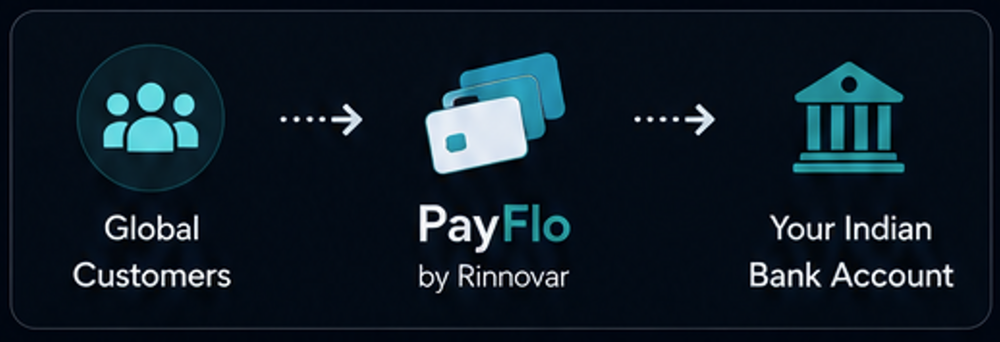
The most effective way to manage international payments is to use a setup specifically designed for the travel industry. This is where a structured collection layer becomes important. Payflo can support collections, retries, and global payments more efficiently.

Instead of a single “Check Out” button, this creates a dedicated payment environment where:
- Transactions are routed to the gateway most likely to approve a US card.
- Payment failures are tracked in real-time within your Travel CRM.
- Automatic retries happen in the background without bothering the client.
This is how you reduce payments failing, delayed payments, money getting stuck, and teams chasing customers after the sale.
This approach significantly reduces delayed collections (DSO): the time it takes for money to move from your client’s card to your bank account. By tightening this window, you prevent revenue leakage, where potential sales disappear because of technical payment friction rather than a lack of customer interest.

Summary for Operators
Accepting US credit card payments is not about finding the “cheapest” gateway; it’s about finding the one that actually converts. Every 1% increase in payment approval rates goes directly to your bottom line. Move your operations to a system that understands the travel-specific nuances of cross-border finance.
This is not a customer problem. It’s a system problem.
The sale is not complete until the money is in your account.

3 Key Takeaways:
- Stop using retail gateways: High-ticket travel bookings require specialized routing that handles US bank fraud filters and standard card transactions.
- Focus on conversion, not fees: A 2% gateway fee is irrelevant if 20% of your transactions are being declined.
- Automate your recovery: Use tools that reduce payments failing, delayed payments, money getting stuck, and manual chasing customers.
Why this happens (simple):
- US cards don’t always use the same security checks as Indian banks.
- High-value travel payments are often flagged as high-risk.
- Using a single gateway creates a single point of failure.
- Delays in processing lead to customers losing trust and walking away.
Alternate Titles:
- How to Reduce US Credit Card Declines for Indian Travel Agencies
- Payment Orchestration for Travel: A Guide for Indian Agencies Targeting the US
SEO Check:
- Primary Keyword: “Best way to accept US credit card payments in India” (In Title and first 100 words).
- Headings: Keyword used in H1 and section headings.
- Internal Links: Linked to Travel CRM and Rinnovar services.